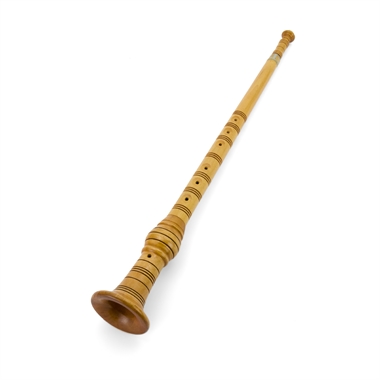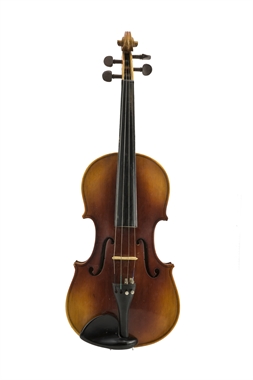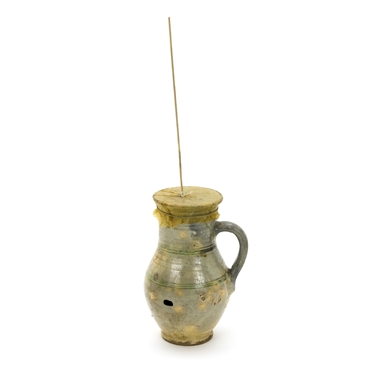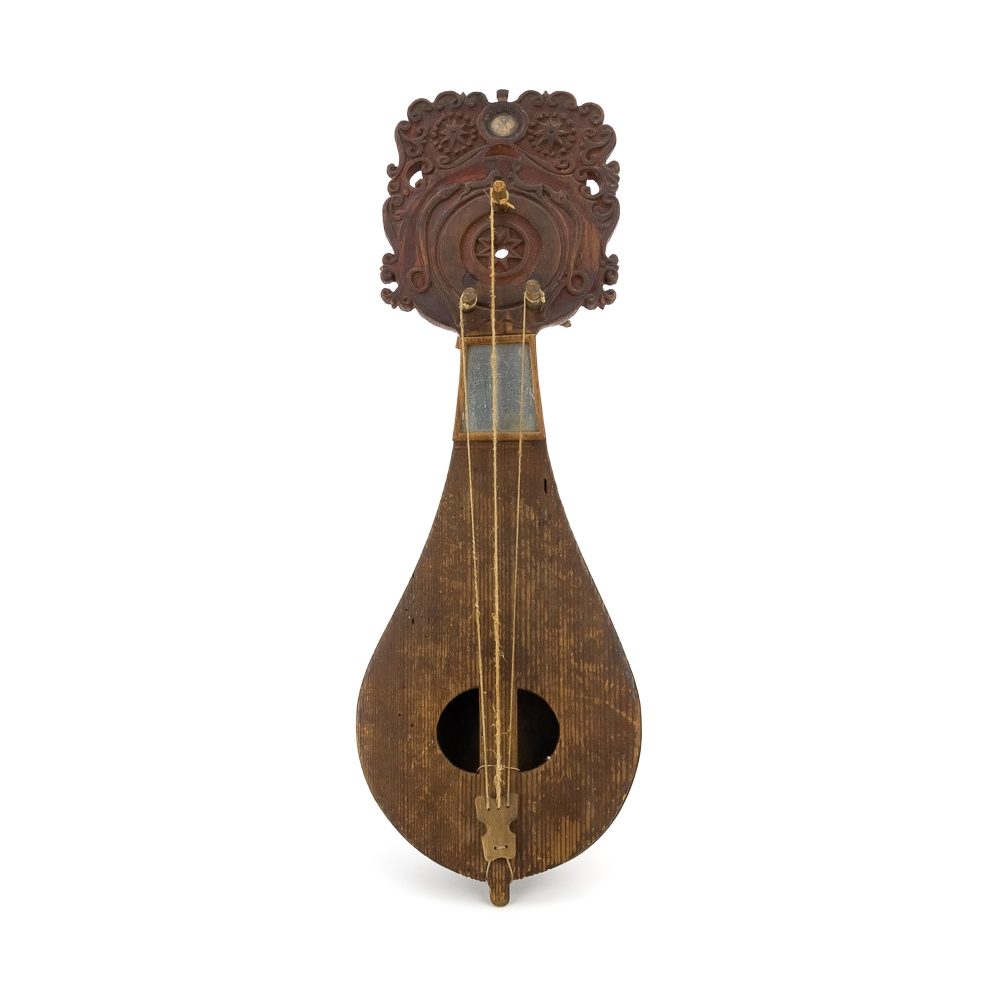
The collection of musical instruments preserves valuable pieces of folk art that testify to the high artistic level of anonymous masters. The oldest pieces date from the end of the 18th century, and most of them belong to the 19th and early 20th centuries. According to the musical instrument classification (HS system), musical instruments are divided into aerophones, chordophones, membranophones and idiophones. A large number of musical instruments were collected by the Folk Music Department of the Ethnographic Museum in Zagreb, which operated from 1920 to 1948. The collection includes 658 instruments, the majority of which are aerophones. Among them, the simplest include (animal) horns, buccina and bark trumpets. Fipple flutes, single chanter instruments with a series of holes and a reeded mouthpiece, and double flutes, double chanter instruments with holes, were usually made by shepherds for their own entertainment. While these instruments can be found throughout Croatia, sopile are musical instruments characteristic of Istria, the Croatian Littoral and the Kvarner Islands, always played in pairs (small and large sopila) and usually accompanying dance. Diple, double chanter instrument with holes and mouthpieces with single-blade reeds, can be without bag or attached to a goat or sheep bladder, which is an air reservoir, thus creating a new type of instrument – mješnice, mišnice, gajde and dude. Mješnice are geographically connected to the Croatian Adriatic region, gajde to mountainous and lowland Croatia, and dude to the Bilogora-Križevci region and the far northeast of Croatia. A separate unit of the museum's collection of chordophones (string instruments) are gusle, musical instruments with one or two strings, the resonator covered with thin animal skin. Gusle are a characteristic of the Dinaric cultural area, unlike the lijerica, which is found in the southern part of Dalmatia. Tamburica is certainly the most popular folk string instrument in Croatia today. The collection includes various types of this instrument, from small ones - bisernica and dangubica for solo playing, larger ones - bugarija and tambura, to basses (berde) that can form small ensembles, but also entire orchestras. It is particularly appreciated in the region of Slavonia. The smallest group are membranophones: from the territory of Croatia there are only two small drums, while there are about twenty idiophones. These are mostly bells and rattles that play a special role in annual customs: they are used in carnival processions to produce as much noise as possible, as well as in the last three days of Lent before Easter to announce the church service.
We use cookies to track visits to our pages (Google Analytics) for the purpose of improving the pages. The statistics are collected anonymously, and by accepting, you agree to the use of cookies. Find out more